What Is Soy Wax? The Complete Beginner’s Guide
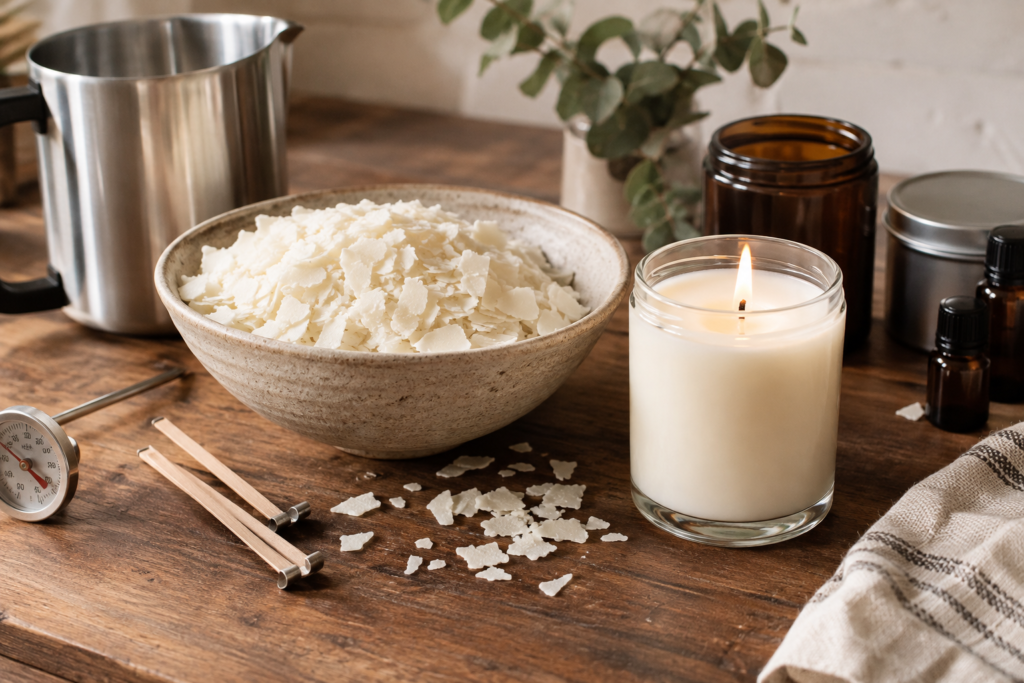
If you have spent more than five minutes looking into candle making, you have probably noticed that soy wax is everywhere.
It comes in flakes, pellets and sometimes in large blocks that look a bit like huge chunks of butter. It is used by beginners, experienced candle makers, small businesses and large manufacturers. You will find it in many homemade jar candles as well as in beautiful candle sculptures which come in millions of different shapes.
But what exactly is soy wax?
Is it really made from soybeans? Is it better than paraffin wax? Does it burn differently? And why do some soy candles look perfectly smooth while others develop a white, frosty surface?
Let’s take a closer look at this popular candle-making material, from what it is and how it is made to its advantages, limitations and what you should know before buying your first bag.
What Exactly Is Soy Wax? And How Is It Made?
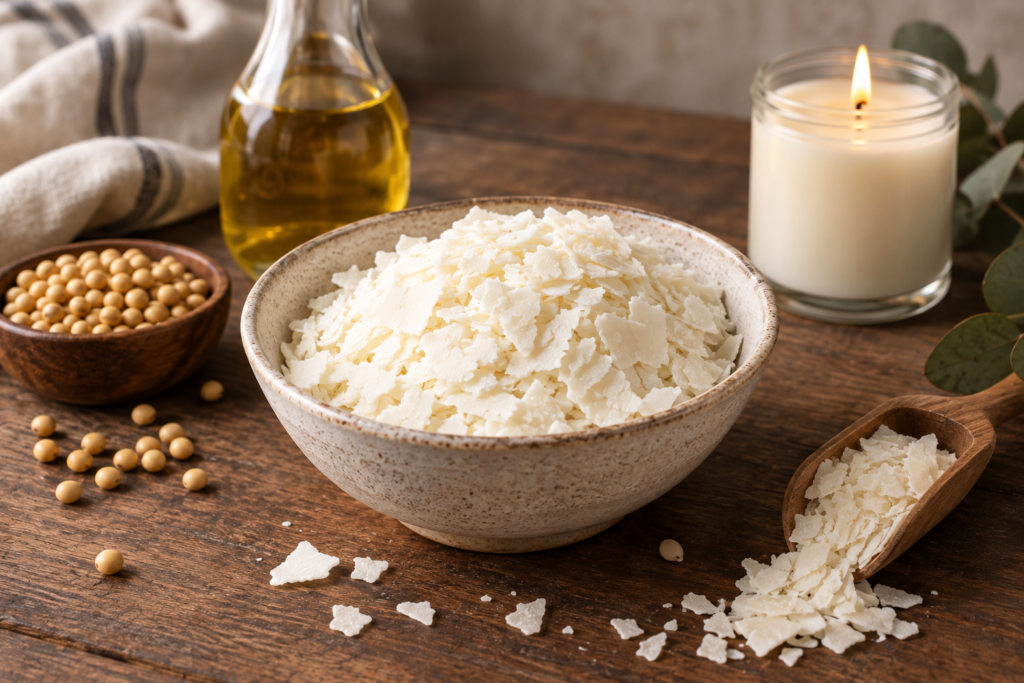
Soy wax is a vegetable-based wax made from soybean oil.
The process begins with soybeans, which are cleaned and processed to extract their oil.
Soybean oil is naturally liquid at room temperature, so it cannot simply be poured into a candle mould and expected to stay there. To turn the oil into a usable candle wax, it goes through a process called hydrogenation.
During hydrogenation, hydrogen is added to the oil, changing its chemical structure and making it more solid. The resulting material can then be processed into the flakes, pellets or other forms commonly sold for candle making.
So, in simple terms:
Soybeans → soybean oil → hydrogenation → soy wax
The final wax has been processed to create a material with the consistency and melting behaviour needed for applications such as candles, wax melts and other products.
Some soy waxes are sold as relatively simple soy-based formulations. Others contain additives or are blended with other waxes to improve particular characteristics, such as:
- hardness;
- glass adhesion;
- surface appearance;
- fragrance performance;
- mould release;
- resistance to frosting.
The exact characteristics of soy wax depend on how it has been processed and formulated. This is why two products labelled “soy wax” can behave quite differently when melted, scented or poured.
What Is Soy Wax Used For?

Soy wax is used in a few different industries, although candle making is probably where most people encounter it:
- Container Candles: Soy wax is particularly popular for jar and tin candles because many soy waxes have a relatively low melting point and adhere well to the sides of containers.
- Wax Melts: Soy wax can hold and release fragrance oils effectively, making it a common choice for scented wax melts used in warmers.
- Cosmetics and Skincare: Its soft, smooth consistency makes soy wax useful as a base in products such as balms, solid lotions, and ointments.
- Massage Candles: Some specially formulated soy waxes melt into a warm, liquid oil that can be applied to the skin, which is why soy-based massage candles are also available on the market.
- Other Applications: Soy-derived waxes can also be used in certain food coatings, lubricants, paper treatments, and leather-care products, depending on how the wax has been processed and formulated.
For candle making, we’ll focus mainly on container candles and wax melts, while also looking at pillar candles. Sculptural and freestanding candles have become increasingly popular, but their composition differs, as not every soy wax is suitable for every application.
A wax designed for a jar candle may be too soft to create a stable freestanding pillar. Likewise, a harder pillar formulation may not behave as expected when poured into a glass container.
This is one of the first things to check when shopping: what kind of candle was the wax formulated for?
Container Soy Wax vs. Pillar Soy Wax
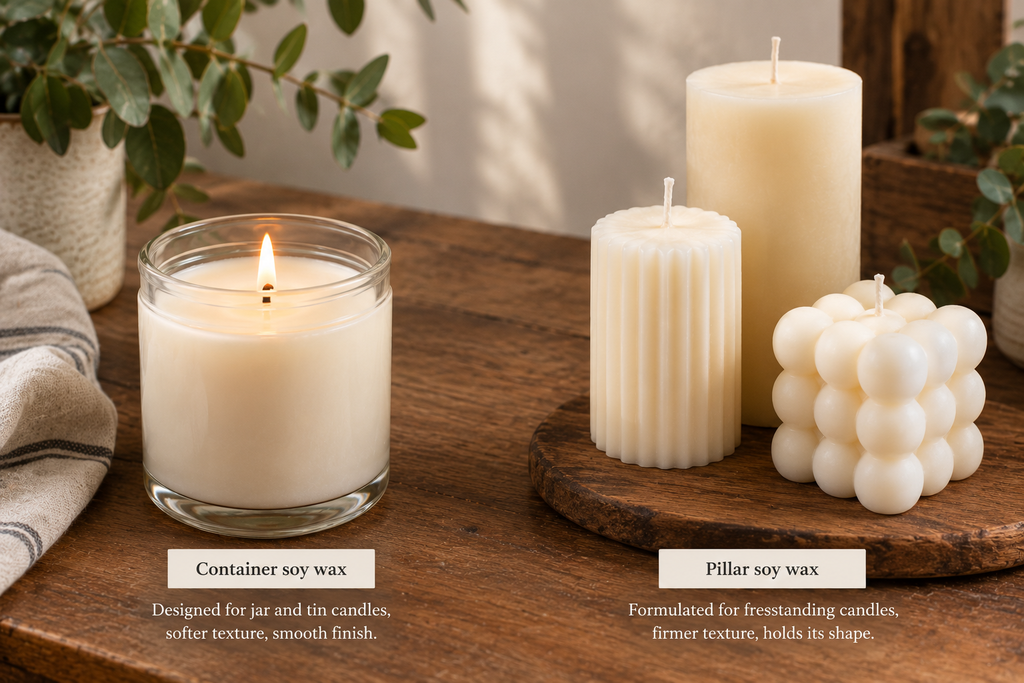
The terms can sound confusing at first, but the distinction is quite straightforward.
Container Soy Wax
Container waxes are designed for candles poured directly into a vessel such as:
- glass jars;
- tins;
- ceramic containers;
- cups;
- decorative pots designed for candle use.
It is generally softer than pillar wax and is designed to work inside a vessel rather than stand on its own. Depending on the formulation, it may offer:
- good adhesion to glass;
- a creamy or opaque appearance;
- a relatively smooth pour;
- a softer finished texture;
- easy handling in beginner candle projects.
Container soy wax is usually the most relevant option if you are making your first candles in jars or tins.
Pillar Soy Wax
Pillar soy wax is formulated for candles that need to hold their own shape after being removed from a mould.
It generally needs to be firmer and more structurally stable than container wax. It may be used for:
- freestanding candles;
- sculptural candles;
- decorative pillars;
- taper candles.
A product’s name, colour or appearance is not enough to tell you how it will perform. Always check the manufacturer’s intended application before buying.
Wax Melts
The same principle applies to wax melts, which are scented pieces of wax designed to be melted in a wax warmer to release fragrance. They’ve become quite trendy in home decor in recent years, coming in huge varieties of shapes and fragrances.
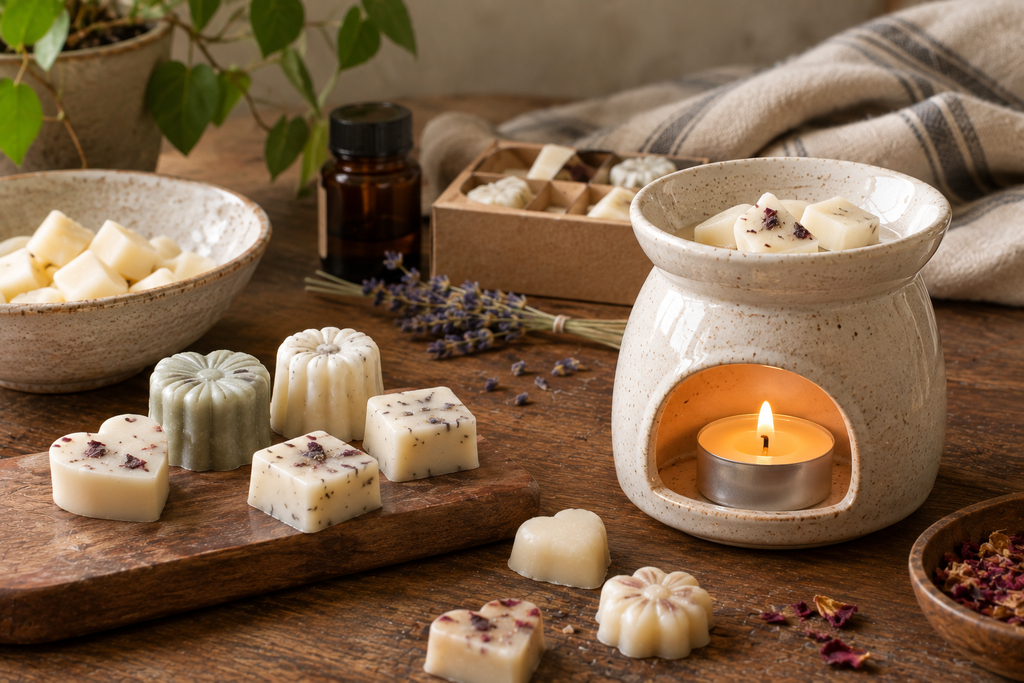
They can, and quite often are, made from soy wax, using fragrance oils and other candle-making ingredients to create the final product.
If you want to know more, we made a comprehensive article about wax melts, talking about what they are, how to make them and different designs, so you could add wax melts to your candle business down the line.
Why Do Candle Makers Like Soy Wax?
Soy wax has become popular for several reasons:
– It comes from a plant-based source, which appeals to candle makers who prefer plant-derived materials. This is one reason it is often used in candles marketed as vegetable-based or natural-style products. However, the final formulation may include additives or other blends of waxes, so it is worth checking the specific product rather than relying only on the word “soy.”
– Many soy waxes also produce a pale, opaque finish that works particularly well with minimalist candles, neutral colour palettes and soft decorative designs. The finished candle may look white, ivory or slightly creamy, although some formulations can produce a more translucent appearance, especially when blended with other waxes.
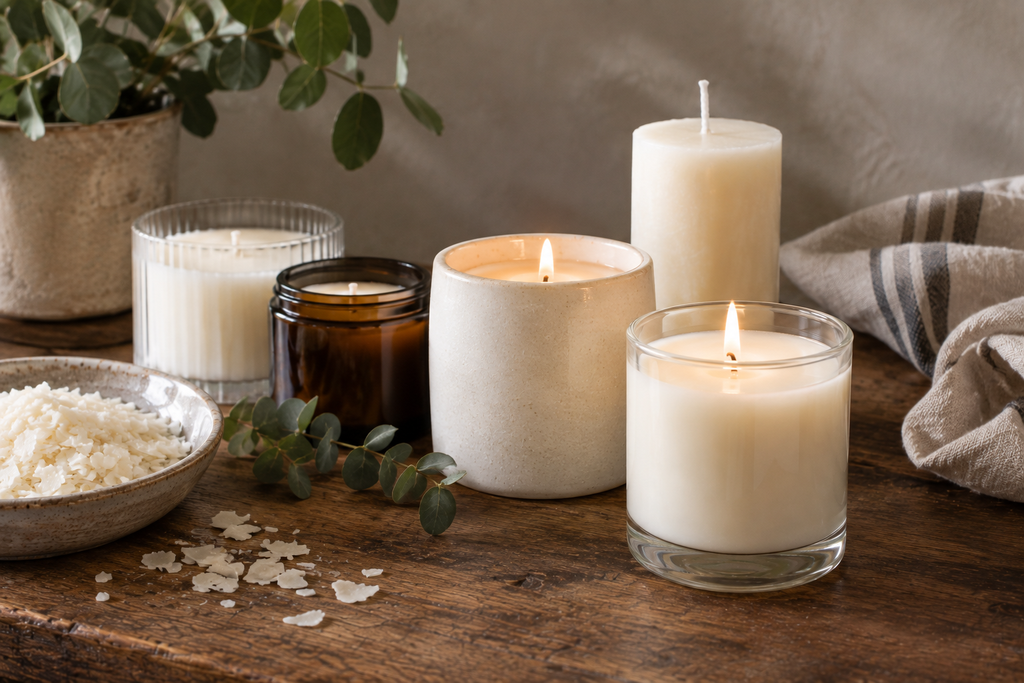
-Another advantage is simply how easy soy wax is to find. It is available from candle-making suppliers, craft shops and online stores, often in small quantities. This can be useful when you are still experimenting and do not want to buy a huge amount of material before knowing which wax you prefer.
Many beginner candle kits also use soy wax, especially for simple container candles. That does not mean it is completely effortless: you still need proper measuring, temperature control, wick selection and testing. However, it is a familiar and accessible starting point for many new candle makers.
Soy wax residue can often be removed from equipment with hot water and soap, although the exact cleaning method depends on the amount of wax, the surface and whether other materials are present. Many candle makers use heat guns for cleaning purposes as well.
As a general rule though, don’t use the same tools and containers you use for food preparation for candle making, even if you think you cleaned them enough.
What Are the Downsides of Soy Wax?
Soy wax has plenty of advantages, but it also has some quirks:
It Can Develop Frosting
One of the most recognisable soy wax issues is frosting.
Frosting appears as a pale, powdery or crystalline-looking layer on the surface of the candle. It is especially common in some soy formulations and may become more noticeable as the candle cools or ages.
Frosting is usually an aesthetic issue rather than a sign that the candle is unusable. Some candle makers dislike the appearance, while others consider it part of the character of vegetable waxes.
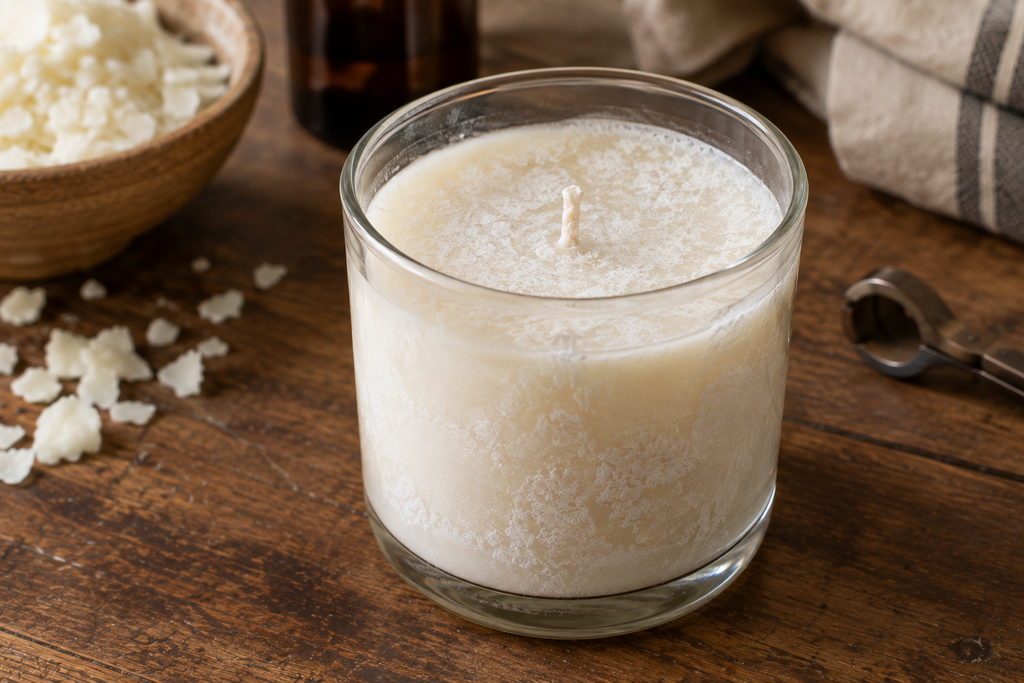
If you want to understand this problem in detail, see our guide Candle Frosting: Everything You Need to Know.
It Can Have an Uneven Surface
Soy candles may sometimes cool with a rough, lumpy or uneven top.
This can happen for several reasons, including the wax formulation, cooling conditions, pouring temperature and the way the candle is handled while setting.
A slightly imperfect surface does not automatically mean the candle will burn badly. However, it is worth learning to distinguish cosmetic imperfections from problems that may affect performance.
It Is Often Softer Than Other Waxes
Many soy waxes are relatively soft, particularly those designed for containers.
This can be useful for certain applications, but it also means the finished candle may scratch, dent or soften more easily than a harder wax. It may not be the best choice when you need a very firm freestanding candle.
It Requires Proper Wick Testing
A wick that works beautifully in one soy wax may not produce the same result in another.
The wick must be able to create a suitable melt pool without producing excessive heat, smoke or an unstable flame. That is why candle makers test different wick sizes and types rather than assuming one wick will work for every soy wax candle.
The wick is only one part of the finished candle, but it is a very important one.
Does Soy Wax Hold Fragrance Well?
Yes, soy wax can hold and release fragrance quite effectively, but the result is not determined by wax alone.
In candle making we usually talk about two types of fragrance performance:
- Cold throw: how strongly the candle smells when it is not burning.
- Hot throw: how strongly the candle smells while it is burning.
A candle can have a noticeable cold throw but a disappointing hot throw, or the other way around.
Fragrance performance can be affected by:
- the soy wax formulation;
- the fragrance oil itself;
- the amount of fragrance used;
- the temperature at which it is added;
- mixing;
- wick choice;
- container size;
- curing time.
Adding more fragrance is not always the answer. Too much fragrance can create other problems, including “sweating”, poor burning behaviour or an unstable candle.
The safest approach is to follow the wax manufacturer’s recommended fragrance range and test the finished candle instead of assuming that a higher percentage will automatically produce a stronger scent.
Is Soy Wax Easy to Work With?
Soy wax is accessible to beginners, but “beginner-friendly” does not mean “impossible to get wrong.”
You will still need to pay attention to:
- weighing the wax accurately;
- melting it safely;
- using the temperatures recommended for your specific product;
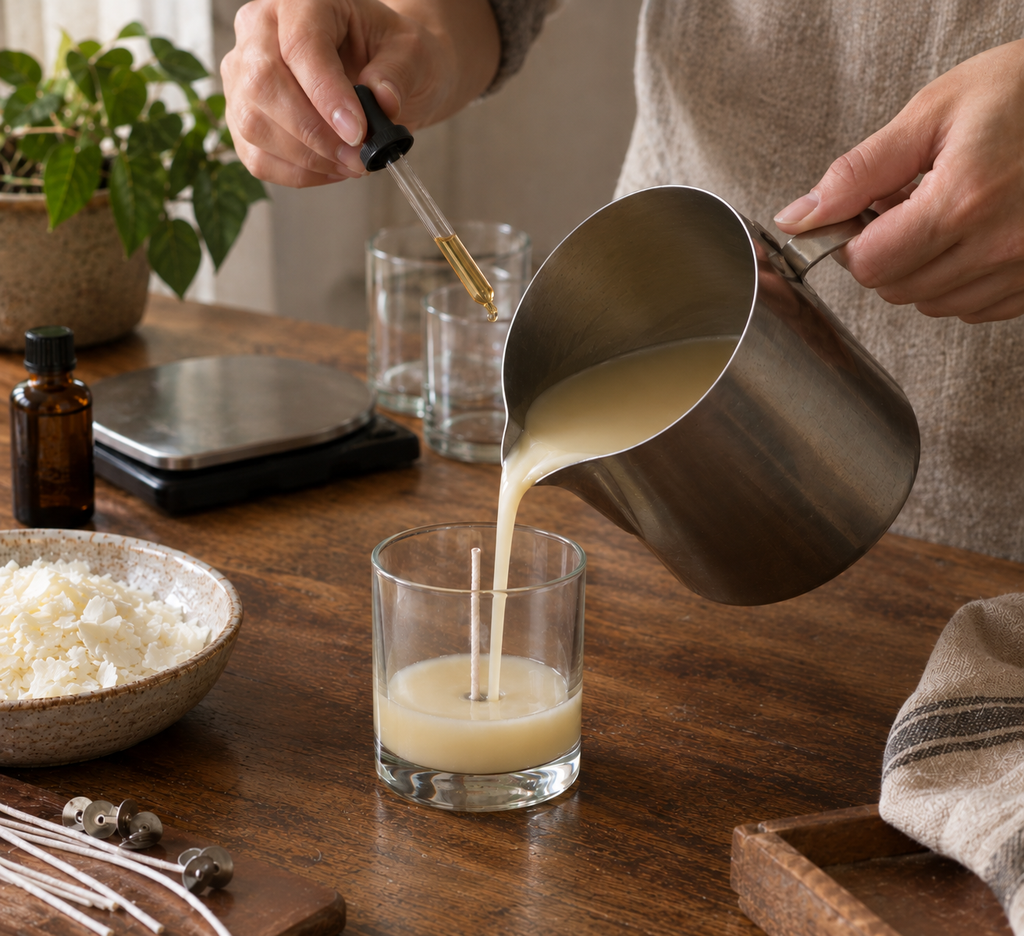
- adding fragrance correctly;
- preparing the container and wick;
- pouring carefully;
- allowing the candle to cool in a controlled environment.
There is no single temperature that applies to every soy wax on the market. Different formulations may have different melting points, recommended fragrance-addition temperatures and pouring temperatures.
How Long Does Soy Wax Take to Cure?
Soy wax candles generally need around 1 to 2 weeks (10–14 days) to fully cure and develop their best fragrance throw and burning performance.
Hardening vs. Curing
- Hardening: Soy wax will usually become completely solid within 24–48 hours. At this stage, the candle has cooled and hardened enough to be handled, but it is not necessarily ready for the best performance.
- Curing: Curing takes longer than simply allowing the wax to harden. During this time, the wax structure continues to stabilize and the fragrance becomes more thoroughly incorporated into the wax.
Soy Wax Curing Timeline
- 1–3 days: The candle has hardened and can be tested, but the scent throw may still be relatively weak.
- 7–14 days: This is generally considered a good curing period for soy candles, giving the fragrance more time to develop and the wax to stabilize.
- Unscented candles: If no fragrance oil has been added, there is no fragrance to cure. The candle generally only needs 24–48 hours to cool and fully set.
Tips for Curing Soy Wax Candles
- Store candles in a cool, dry, and dark place, away from direct sunlight.
- Try to keep the temperature relatively stable during the first couple of days.
- Write the pour date on each jar so you can keep track of how long your candles have been curing.
Is Soy Wax Natural, Vegan and Eco-Friendly?
This is where the language used in candle marketing can become a little slippery.
Soy wax comes from a plant-based source, but that does not automatically mean that every soy candle is:
- completely natural;
- additive-free;
- vegan;
- biodegradable in every finished form;
- environmentally impact-free;
- safer than every other type of candle.
The final candle may contain fragrance, colourants, additives, a wick and other components.
If a product is labelled vegan or contains a specific certification, check what that claim actually refers to. A soy-based wax and a completely finished vegan candle are not necessarily the same thing.
How to Choose Soy Wax as a Beginner
When you are buying your first soy wax, do not choose only by price or by the prettiest product photograph.
Look for the following information:
1. Is It for Containers or Pillars?
This should be one of the first things you check.
If you are making candles in jars, choose a wax intended for container candles. If you want freestanding or moulded candles, look for a suitable pillar formulation.
2. What Are the Recommended Working Temperatures?
For most soy waxes, a good general temperature range is around 75–85°C (170–185°F) for melting, 70–75°C (155–165°F) for adding fragrance, and 50–65°C (120–150°F) for pouring.
However, there is no single temperature that works for every type of soy wax. Different formulations, such as container waxes, pillar blends, and low-melting-point waxes, can require different temperatures. Always check the manufacturer’s recommended temperatures for the specific soy wax you are using.
3. What Is the Recommended Fragrance Load?
The ideal fragrance load for soy wax generally falls between 6% and 10% of the wax weight. The right amount can vary depending on the specific wax and fragrance oil, so it is always a good idea to follow the manufacturer’s recommendations.
Recommended Ratios
- Starting point (6–8%): If you are testing a new fragrance, starting with around 6–8% is a good baseline. For example, 1 oz of fragrance oil for every 16 oz (1 lb) of soy wax gives you a fragrance load of about 6.25%
- Maximum load (10%): Some soy waxes, such as Golden Wax 464, can hold up to around 10% fragrance oil. However, the maximum fragrance load depends on the specific wax.
- Don’t overdo it: Adding more fragrance oil does not necessarily result in a stronger-smelling candle. Too much oil can lead to sweating, poor burning, or wick problems. Always check the recommended fragrance load for your particular soy wax before increasing the amount.
4. Does the Product Contain Additives or Other Waxes?
Some products are pure soy-based formulations, while others are blends of different waxes, like coconut wax or paraffin wax.
Neither category is automatically right or wrong. The important thing is to know what you are buying and why that formulation suits your project.
5. Is It Sold in a Quantity You Can Test?
If you are still learning, buying a smaller quantity can be a smarter choice.
It is better to test a wax with one or two fragrances and a few wick options before investing in a large supply.

Is soy wax better than paraffin wax?
Neither wax is automatically better for every candle maker.
Soy wax is plant-based and often produces a soft, creamy-looking candle. Paraffin is known for its versatility and strong fragrance performance in many formulations. The right choice depends on the type of candle you want to make and the characteristics you value in your candle business.
We compared these two popular waxes in a dedicated article, you can find it here.
Is soy wax suitable for beginners?
Yes. There are a few reasons why:
- Easy to clean: Since soy wax is water-soluble, spills and leftover wax can be cleaned up easily with warm water and soap.
- Lower melting point: Soy wax generally has a relatively low melting point compared with many paraffin and beeswax formulations, making it easier to work with at home.
- Eco-friendly: Made from soybean oil, soy wax is a renewable, plant-based material that is biodegradable.
Can soy wax be used for pillar candles?
Some soy waxes, such as KeraSoy Pillar 4120 or EcoSoya PillarBlend, are formulated for pillar candles, but ordinary container soy wax may be too soft.
Always check the intended use of the specific product.
Why does soy wax turn white?
Soy wax can develop a pale, crystalline-looking appearance known as frosting.
This is a common visual characteristic of some soy formulations and does not automatically mean the candle is defective.
Does soy wax burn longer than paraffin?
Soy wax can have a slower burn rate than paraffin, but there is no universal percentage that applies to every candle. Burn time is affected by the wax formulation, wick, candle size, fragrance and other factors.
In controlled testing, soy candles have sometimes shown lower wax consumption rates than paraffin candles, attributed to a denser molecular structure than Paraffin.
Can soy wax be mixed with other waxes?
Yes, soy wax can be blended with other types of wax, including paraffin, coconut wax, and beeswax. Combining different waxes can help adjust the candle’s texture, fragrance performance, and burning characteristics.
Common Soy Wax Blends
- Soy and Paraffin: This combination is often known as a “parasoy” blend. Paraffin can help improve fragrance throw, while soy wax contributes to a cleaner-burning candle.
- Soy and Coconut: Coconut wax can give soy wax a smoother, creamier texture. Since coconut wax is quite soft, the proportions need to be balanced to prevent the blend from becoming too soft or separating.
- Soy and Beeswax: Adding beeswax creates a firmer wax blend and can give the candle a subtle natural honey scent. It is generally best to use a moderate amount of beeswax so that its scent does not overpower the fragrance or affect the performance of the soy wax.
Is soy wax biodegradable?
Yes, soy wax is biodegradable, meaning it can naturally break down in the environment without leaving behind harmful residues.
Keep in mind that the overall biodegradability of a finished candle depends also on its complete formulation.
Final Thoughts
Now you know everything you need to go and start experimenting with soy wax. After all, candle making is part science, part craft and occasionally part detective work. The wax usually has a few opinions of its own.
Let us know if this guide was helpful and helped you make your first batch!
2 Comments